
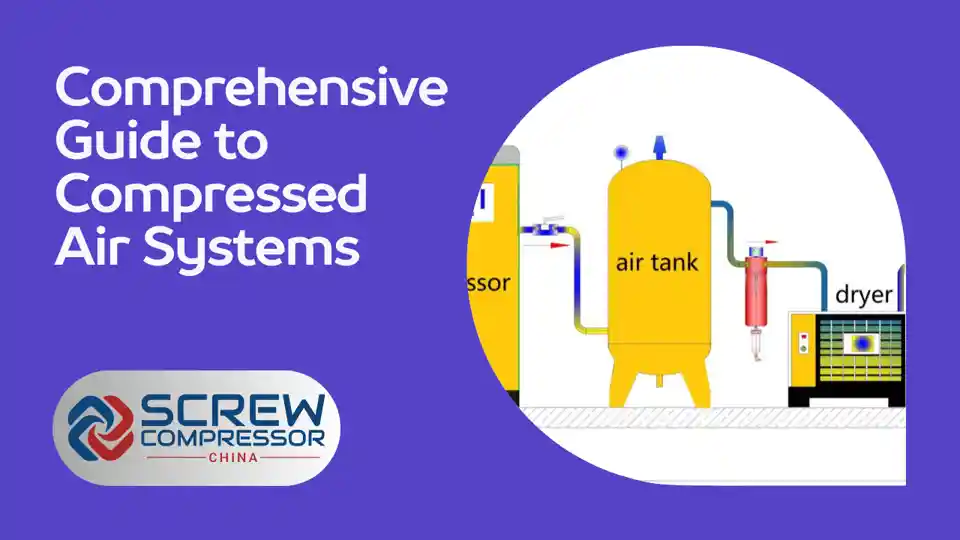
圧縮空気システムを理解する
圧縮空気システムはさまざまな産業に不可欠です、精密かつ効率的に工具や機械に動力を供給します。これらのシステムは大気圧よりも高い圧力の空気の力を利用しており、自動車製造から食品加工まであらゆる分野で利用されています。
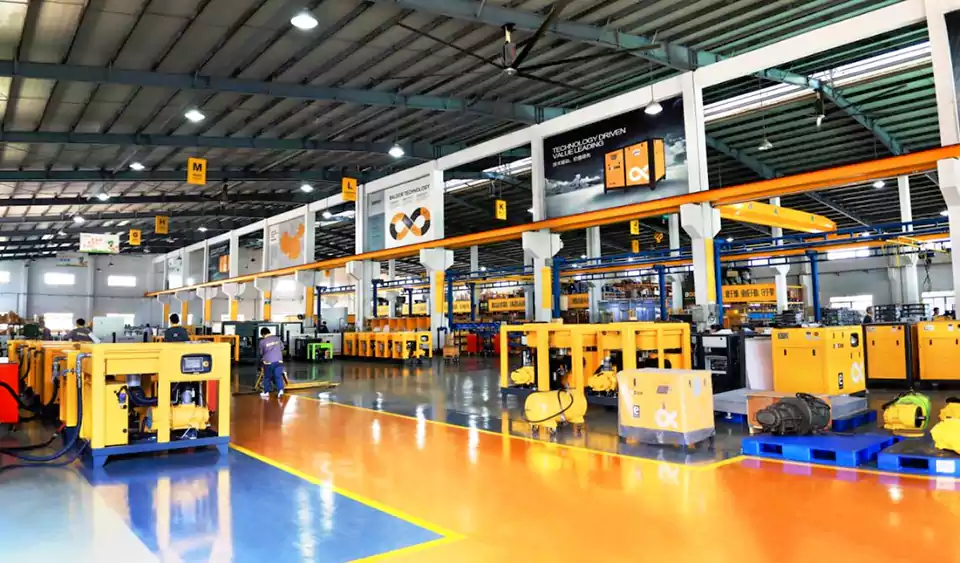
圧縮空気システムは、圧縮空気の生成、処理、貯蔵、分配を行うために連携して動作するいくつかの主要なコンポーネントで構成されています。 主なコンポーネントにはエアコンプレッサーが含まれます空気を加圧し、 air dryers to remove moisture, storage tanks to hold the compressed air, and a network of pipes and valves to distribute the air to where it’s needed.
The quality and efficiency of compressed air can greatly influence operational success, making comprehensive system design crucial. Factors such as air pressure, flow rate, air quality, and energy efficiency must be carefully considered when designing or optimizing a compressed air system.
What is a Compressed Air System?
Compressed air is energy stored under pressure, created by air compressors that convert atmospheric air into a usable force. The air is compressed to a higher pressure, typically measured in pounds per square inch (psi) or bar, which allows it to be used to power pneumatic tools, machinery, and processes.
Compressed air is often referred to as the “fourth utility” in industrial settings, alongside electricity, water, and gas. It’s a versatile and safe power source that can be easily transported through pipes to various points of use.
The main components of a compressed air system include:
- Air Compressor: The heart of the system, which compresses the air to the desired pressure. There are several types of compressors, such as reciprocating, 回転ネジ, and centrifugal compressors.
- Air Dryer: Removes moisture from the compressed air to prevent corrosion and improve air quality. Types include refrigerated dryers, desiccant dryers, and membrane dryers.
- Air Receiver Tank: Stores the compressed air and helps maintain a constant pressure in the system.
- Filters: Remove contaminants such as dust, oil, and moisture from the compressed air to protect downstream equipment and ensure air quality.
- Piping Network: Distributes the compressed air from the compressor to the points of use, such as pneumatic tools and machinery.
- Pressure Regulators and Controls: Maintain the desired pressure levels and control the flow of compressed air to various applications.
Learn more about the basics of compressed air systems。
Key Components of a Compressed Air System
The major components of a compressed air system work together to ensure a reliable supply of clean, dry air at the correct pressure for various applications. Understanding the role and importance of each component is crucial for designing, operating, and maintaining an efficient system.
1. Air Compressors
Air compressors are the primary component responsible for pressurizing the air. They come in various types, such as reciprocating (piston), rotary screw, and centrifugal compressors, each with its own advantages and suitable applications.
Reciprocating compressors are often used for smaller applications or where intermittent use is required. ロータリースクリューコンプレッサー are more common in industrial settings due to their efficiency and ability to provide a continuous supply of compressed air. Centrifugal compressors are typically used in large-scale, high-volume applications.
2. Air Dryers
Moisture in compressed air can lead to corrosion, equipment damage, and product quality issues. Air dryers remove this moisture to ensure a supply of dry, quality air. The three main types of dryers are:
- Refrigerated Dryers: Cool the air to condense and remove moisture, suitable for general industrial applications.
- Desiccant Dryers: Use adsorbent materials to remove moisture, providing very dry air for sensitive applications.
- Membrane Dryers: Use semi-permeable membranes to separate moisture from the air, offering a compact and energy-efficient solution.
3. Air Receiver Tanks
Air receiver tanks store the compressed air and help maintain a stable pressure in the system. They act as a buffer, allowing the compressor to operate more efficiently by reducing the frequency of starts and stops. Receiver tanks also help to smooth out pulsations and provide a reserve of compressed air for peak demand periods.
4. Filters
Filters are essential for removing contaminants such as dust, oil, and moisture from the compressed air. They help protect downstream equipment, improve product quality, and ensure the air is suitable for breathing in certain applications. Filters are typically installed at various points in the system, such as after the compressor, before and after the dryer, and at points of use.
5. Piping Network
The piping network is responsible for distributing the compressed air from the compressor to the points of use. Proper sizing and layout of the piping network are crucial for minimizing pressure drop, ensuring adequate flow, and maintaining air quality. Factors to consider include pipe diameter, material, and layout, as well as the use of fittings, valves, and connectors.
6. Pressure Regulators and Controls
Pressure regulators and controls maintain the desired pressure levels and control the flow of compressed air to various applications. They help optimize system performance, reduce energy consumption, and protect equipment from damage due to excessive pressure.
Regulators are typically installed at points of use to provide the specific pressure required for each application. Control systems, such as pressure switches and variable speed drives, help maintain a stable system pressure and match compressor output to demand.
スクリューコンプレッサー中国, a leading air compressor manufacturer, provides a variety of equipment tailored to meet industrial needs, including compressors, dryers, filters, and control systems. Their expertise can help you design and optimize a compressed air system that meets your specific requirements.
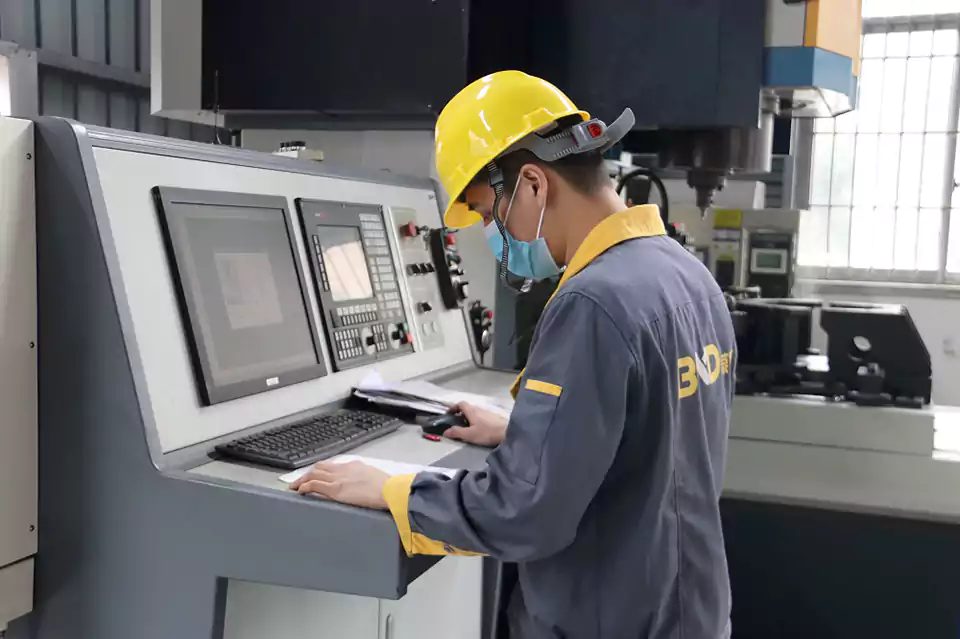
エアコンプレッサーの種類
Understanding the different types of air compressors can help in selecting the right one for your needs. Each type has its own advantages, disadvantages, and suitable applications, depending on factors such as required pressure, flow rate, air quality, and energy efficiency.
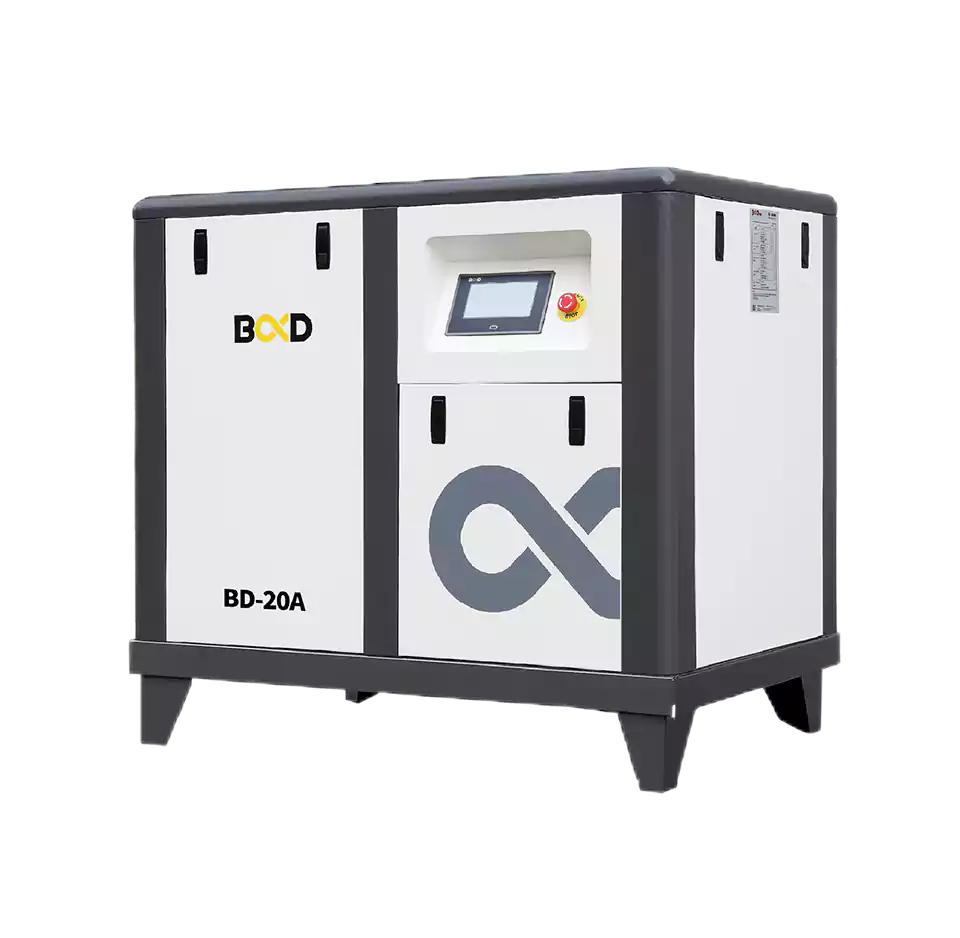
The two main categories of air compressors are positive displacement and dynamic compressors. Positive displacement compressors work by trapping a fixed volume of air and reducing its volume to increase the pressure. Dynamic compressors, on the other hand, use high-speed rotating impellers to impart velocity to the air, which is then converted to pressure.
ロータリースクリューコンプレッサー
ロータリースクリューコンプレッサー are the most common type used in industrial applications. They are positive displacement compressors that use two meshing helical screws to compress the air continuously. As the screws rotate, they trap air between them and the compressor housing, reducing the volume and increasing the pressure.
Advantages of rotary screw compressors include:
- High efficiency and energy savings potential
- Continuous air supply without pulsation
- Compact size and low noise levels
- Low maintenance requirements and long service life
Rotary screw compressors are suitable for a wide range of applications, from small workshops to large industrial plants. They are available in both oil-injected and oil-free versions, with oil-free compressors providing higher air quality for sensitive applications.
For detailed specifications and performance data, check out Screw Compressor China’s rotary screw compressors。
Piston Compressors
Piston compressors, also known as reciprocating compressors, are positive displacement compressors that use a piston driven by a crankshaft to compress the air. As the piston moves down, it draws air into the cylinder through an inlet valve. When the piston moves up, it compresses the air, which is then discharged through an outlet valve.
Piston compressors are available in single-stage and two-stage configurations, with two-stage compressors providing higher pressures and efficiency. They are typically used in smaller applications or where intermittent use is required, such as in workshops, garages, and home use.
Advantages of piston compressors include:
- Lower initial cost compared to other types
- Simple design and easy maintenance
- Suitable for intermittent use and lower air demand
- Can achieve high pressures in two-stage configurations
Disadvantages include higher noise levels, pulsating air delivery, and lower efficiency compared to rotary screw compressors.
遠心圧縮機
Centrifugal compressors are dynamic compressors that use a high-speed rotating impeller to impart velocity to the air, which is then converted to pressure in a diffuser. They are typically used in large-scale, high-volume applications, such as in power plants, chemical processing, and oil and gas industries.
Advantages of centrifugal compressors include:
- High flow rates and efficiency
- Continuous, pulsation-free air delivery
- メンテナンスの必要性が低い
- Oil-free operation for high air quality
Disadvantages include higher initial costs, limited pressure ratios per stage, and reduced efficiency at part-load conditions.
When selecting an air compressor, consider factors such as your air demand, required pressure, air quality needs, energy efficiency, and maintenance requirements. Consult with a compressed air system expert, such as スクリューコンプレッサー中国, to help determine the best type and size of compressor for your specific application.
Optimizing Compressed Air Systems
Proper system design involves more than just selecting the right compressor. It requires a holistic approach to ensure all components are harmonized to deliver air efficiently and reliably. Optimizing your compressed air system can lead to significant energy savings, improved performance, and reduced maintenance costs.
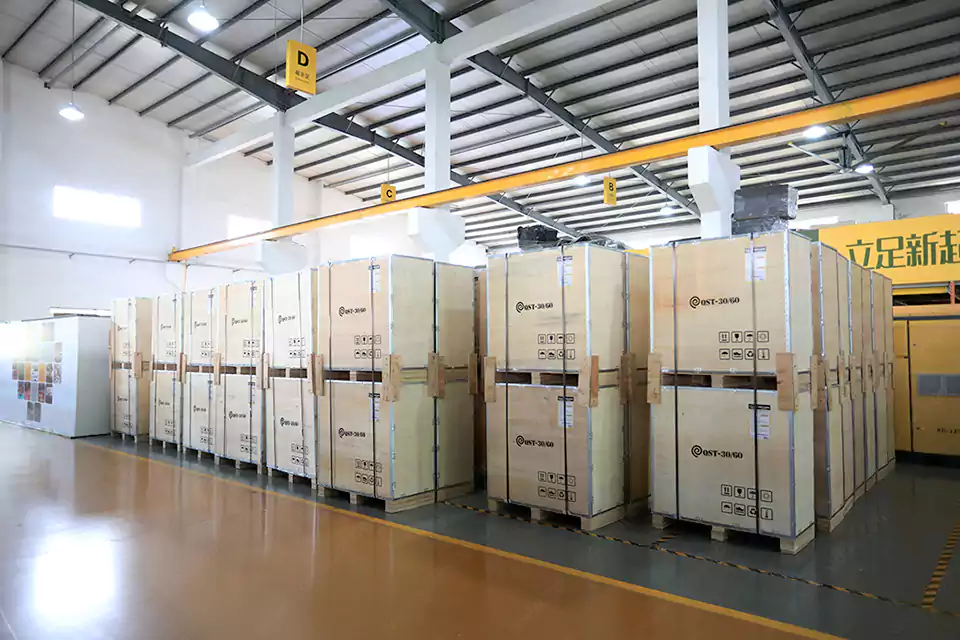
Key areas to focus on when optimizing your compressed air system include:
Air Quality and Filtration
Maintaining the quality of your compressed air is essential for protecting downstream equipment, ensuring product quality, and providing a safe working environment. Contaminants such as dust, oil, and moisture can lead to equipment damage, reduced efficiency, and potential health hazards.
To ensure high air quality, a comprehensive filtration system should be installed at various points in the compressed air system. This typically includes:
- Intake filters to prevent dust and debris from entering the compressor
- Coalescing filters to remove oil and water aerosols
- Particulate filters to remove solid particles
- Adsorption filters to remove oil vapors and odors
High-quality air filters 汚染物質を除去し、圧縮空気システムの効率を維持するために重要です。最適なパフォーマンスを確保するには、定期的なフィルターのメンテナンスと交換も不可欠です。
エネルギー効率
圧縮空気システムは産業施設においてエネルギーを大量に消費し、多くの場合、総電力消費量の 10 ~ 30% を占めます。 圧縮空気システムのエネルギー効率を最適化すると、大幅なコスト削減につながります 環境への影響を軽減します。
エネルギー効率を向上させるための主要な戦略には次のようなものがあります。
- 需要と供給のマッチング: 過剰生産によるエネルギーの無駄を避けるために、コンプレッサーの容量が空気需要と一致していることを確認してください。これは、システムの適切なサイジング、複数のコンプレッサーの使用、または可変速ドライブの実装によって実現できます。
- 減圧: Every 2 psi increase in pressure requires approximately 1% more energy. Operate your system at the lowest pressure necessary to meet your requirements, and consider using pressure regulators at points of use.
- Minimizing leaks: Air leaks can account for 20-30% of compressed air energy consumption. Implement a regular leak detection and repair program to minimize losses.
- Heat recovery: Compressors generate significant amounts of heat, which can be captured and used for space heating, process heating, or water heating, reducing overall energy consumption.
- Proper maintenance: Regular maintenance, such as cleaning coolers, replacing filters, and lubricating moving parts, helps maintain compressor efficiency and prevents energy waste.
Incorporating technologies such as variable speed drives can significantly reduce energy consumption by aligning compressor output with demand. Learn how Screw Compressor China’s solutions enhance energy efficiency.
System Maintenance
Regular maintenance is essential to ensure the long-term reliability, efficiency, and safety of your compressed air system. A well-maintained system will experience fewer breakdowns, consume less energy, and provide higher quality air.
Key elements of a comprehensive maintenance program include:
- Routine inspections: Regularly inspect your compressor, dryers, filters, and other components for signs of wear, leaks, or damage. This can help identify potential issues before they lead to failures or efficiency losses.
- Filter replacements: Replace air filters regularly to maintain air quality and prevent contaminants from entering the system. The frequency of filter replacements will depend on your specific operating conditions and air quality requirements.
- Lubrication: Ensure that your compressor and other moving parts are properly lubricated to reduce wear and maintain efficiency. Use the recommended lubricants and follow the manufacturer’s guidelines for lubrication intervals.
- Cooling system maintenance: Clean and maintain your compressor’s cooling system, including coolers, fans, and water treatment systems (if applicable). Proper cooling is essential for preventing overheating and maintaining compressor efficiency.
- Leak detection and repair: Implement a regular leak detection and repair program to minimize air losses and energy waste. Use ultrasonic leak detectors to identify leaks, and prioritize repairs based on leak size and location.
- Record keeping: Maintain accurate records of maintenance activities, repairs, and performance data. This can help you track system performance over time, identify trends, and make informed decisions about system upgrades or replacements.
スクリューコンプレッサー中国 offers comprehensive maintenance services, ensuring your system operates at peak performance. Their experienced technicians can help you develop and implement a maintenance program tailored to your specific needs.
FAQs on Compressed Air Systems
Q: What is the best type of compressor for a large industrial application?
A: For large-scale industrial use, rotary screw compressors are recommended due to their durability and ability to provide a steady air supply. They offer high efficiency, continuous air delivery, and low maintenance requirements, making them well-suited for demanding industrial applications.
Centrifugal compressors are another option for very large, high-volume applications, such as those found in power plants, chemical processing, and oil and gas industries. They provide high flow rates, continuous operation, and oil-free air delivery.
When selecting a compressor for a large industrial application, consider factors such as your specific air demand, required pressure, air quality needs, energy efficiency, and maintenance requirements. It’s essential to work with a compressed air system expert, such as スクリューコンプレッサー中国、最適なパフォーマンスと効率を実現するために、システムを適切にサイズ設定して設計します。
Q: エアフィルターはどれくらいの頻度で交換する必要がありますか?
答え: エアフィルターの交換頻度はいくつかの要因によって異なります。フィルタの種類、吸入空気の品質、コンプレッサーの動作時間、特定のアプリケーション要件など。一般的なガイドラインとしては次のとおりです。
- 吸気フィルターは月に一度点検し、目詰まりや損傷の兆候が見られる場合は交換する必要があります。ほこりの多い環境や汚染された環境では、より頻繁な交換が必要になる場合があります。
- 油と水のエアロゾルを除去する合体フィルターは、2,000 ~ 4,000 時間の運転ごとに、または差圧測定値に応じて交換する必要があります。
- Particulate filters, which remove solid particles, should be replaced every 4,000 to 8,000 hours of operation, or as indicated by pressure differential readings.
- Adsorption filters, which remove oil vapors and odors, should be replaced every 6,000 to 12,000 hours of operation, or as indicated by the manufacturer’s guidelines.
It’s important to consult your filter manufacturer’s recommendations and monitor your system’s performance to determine the optimal replacement intervals for your specific application. Regular filter inspections and replacements are crucial for maintaining air quality, protecting downstream equipment, and ensuring the efficiency of your compressed air system.
Q: 圧縮空気システムでエアドライヤーを使用する利点は何ですか?
A: 圧縮空気システムでエアドライヤーを使用すると、いくつかの重要な利点があります。
- 湿気の除去: 圧縮空気には当然水分が含まれており、空気がコンプレッサーの下流で冷却されると凝縮する可能性があります。エアドライヤはこの水分を除去し、配管や機器への水分の侵入を防ぎます。腐食、錆び、効率の低下を引き起こす可能性があります。
- 空気の質の改善: 圧縮空気中の湿気もシステムに汚染物質を導入し、最終製品の品質に影響を与える可能性があります。エアドライヤーは、食品加工、医薬品、電子機器製造などのデリケートな用途にとって重要な、空気純度を一定レベルに維持するのに役立ちます。
- メンテナンスコストの削減: By removing moisture, air dryers help prevent corrosion and rust in the compressed air system. This reduces the need for frequent maintenance and repairs, ultimately saving money in the long run.
- Increased equipment lifespan: Moisture-free compressed air helps protect downstream equipment from damage caused by water, rust, and contaminants. This can significantly extend the life of pneumatic tools, machinery, and other equipment that relies on compressed air.
- Enhanced energy efficiency: Dry compressed air reduces the formation of condensation in the system, which can cause pressure drops and affect the efficiency of the compressor. By maintaining a consistent pressure and reducing the load on the compressor, air dryers contribute to overall energy savings.
圧縮空気システム用のエアドライヤを選択するときは、必要な露点、空気流量、アプリケーションの特定のニーズなどの要素を考慮してください。圧縮空気の専門家に相談して、冷凍式、乾燥剤、膜式ドライヤーなど、システムに最適なタイプのドライヤーを決定してください。
結論
産業環境で信頼性が高く、効率的でコスト効率の高い運用を確保するには、適切に設計され、維持された圧縮空気システムが不可欠です。 主要なコンポーネントを理解し、適切なタイプのコンプレッサーを選択し、最適化とメンテナンスのベスト プラクティスを実装することによってを使用すると、エネルギー消費とダウンタイムを最小限に抑えながら、圧縮空気システムのパフォーマンスを最大化できます。
圧縮空気のニーズを定期的に評価し、システムのパフォーマンスを監視し、システムを最高の効率で稼働し続けるために高品質のコンポーネントと定期的なメンテナンスに投資することを忘れないでください。経験豊富な圧縮空気の専門家と提携することで、 スクリューコンプレッサー中国では、システムを最適化し、長期的な成功を達成するために必要な専門知識とソリューションにアクセスできます。
メタ記述: コンプレッサーの種類、主要コンポーネント、最適化とメンテナンスのベスト プラクティスなど、圧縮空気システムの基本事項を学びます。スクリュー コンプレッサー チャイナの高性能ソリューションが、信頼性、効率性、コスト効率の高い圧縮空気供給の実現にどのように役立つかをご覧ください。